France · Ceramics / Porcelain Forming and Finishing
Limoges Porcelain Slip Casting and Greenware Finishing
Coulage en barbotine et finition de la porcelaine crue
In the Limoges practice documented by CRAEFT, porcelain vessels are cast from liquid slip in porous plaster molds. Before firing, the greenware is removed from the mold, handles are joined where needed, and casting seams and excess material are trimmed.
Risk level: Stable ·
- Geographic Center
- Limoges, Haute-Vienne, Nouvelle-Aquitaine, France
- Primary Materials
- Porcelain slip and plaster molds.
- Primary Tools
- Plaster mold, casting vessel, and hand tools for trimming and finishing greenware.
- Process Overview
- Prepare a porous plaster mold, cast the porcelain slip, drain excess slip after the wall has formed, allow the piece to firm up, demold, join attachments where needed, and fettle the surface before firing.
- Traditional Applications
- Mold casting has been used in Limoges porcelain production to form hollow wares and shaped components. Plaster molds take up water from the slip, leaving a wall of clay that can be drained and finished before firing. Sources: Bernardaud manufacturing account and Open University, Slip-casting.
- Contemporary Applications
- Bernardaud uses liquid porcelain slip for casting as part of its Limoges manufacturing. Its catalog includes hollow decorative wares such as vases. The catalog covers several forming methods, so each product’s method should be checked separately. Source: Bernardaud.
- Notable Practitioners
- CRAEFT D1.1 refers to two practitioners by the first names Marie-Laure and Gilles. Confirm their full credits and the actions associated with each recording before adding names to individual asset descriptions.
- Key References
- https://www.mdpi.com/2076-3417/15/10/5408 | https://www.craeft.eu/wp-content/uploads/2025/04/D1.1_V2_2.pdf | https://www.ensad-limoges.fr/en/agenda/documenter-les-gestes-techniques-porcelainiers/ | https://zenodo.org/records/13952102 | https://zenodo.org/records/13955321 | https://zenodo.org/records/15038129 | https://www.open.edu/openlearn/science-maths-technology/engineering-technology/manupedia/slip-casting | https://zenodo.org/records/15037786 | https://www.craeft.eu/representative-craft-instances/rci2-porcelain/recording-session/ | https://www.bernardaud.com/en/gb/the-bernardaud-house/the-manufacture-of-porcelain | https://chefs.bernardaud.com/en/categories/home-decor-vases/vases/products | https://www.craeft.eu/wp-content/uploads/2025/03/7.png | https://www.craeft.eu/wp-content/uploads/2025/03/9.png
- Verification Status
- Desk-Researched — Needs Practitioner Verification
CRAFT DOCUMENTATION LAB · PILOT 01 · CRAFT-3086
Explore the Craft Process
Limoges Porcelain Slip Casting. Explore the proposed sequence of operations and the relationships between making, embodied knowledge and documentary evidence.
Research prototype · Documented observations and provisional interpretations are distinguished under Evidence
ACTIVITY 01 / 05
Prepare mold
Prepare mold.
Critical judgment
Assess mold condition and readiness before introducing liquid porcelain slip.
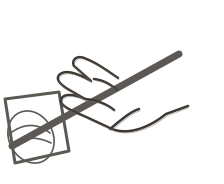
CRAEFT D1.1 pp. 72–73, 83 documents plaster turning, slip casting, fettling and deburring and drying-related pauses; these five steps are an editorial subdivision of slip casting.
More from France
- Épernay Corsetry and Lingerie ConstructionWeaving & Textiles · Critically Endangered
Épernay, in the Marne department, is home to the last operating corsetry workshop in France — the Chantelle factory, where roughly 85 seamstresses hand- and machine-construct structured lingerie using techniques with no remaining external…
- Clermont-Ferrand Michelin Tyre Heritage CraftMiscellaneous & Heritage-Adjacent Craft · Stable
The heritage craft techniques underlying Michelin tyre production — specifically the manual construction and vulcanization skills that preceded and in specialist applications still accompany industrial production.
- Vichy Mineral Water Source ManagementMiscellaneous & Heritage-Adjacent Craft · Stable
The management of the volcanic mineral water sources of Vichy — the thermal capital of France — including the maintenance of the source galleries; the seasonal collection of specific waters from different springs (each with distinct…
- Pineau des Charentes MakingFood, Drink & Botanical · Stable
The making of Pineau des Charentes — a mistelle (grape juice mutage) produced by blending fresh unfermented Ugni Blanc grape juice with Cognac eau-de-vie in the proportions 3:1, then aging the blend in Limousin oak barrels for minimum 18…
- Cognac DistillationFood, Drink & Botanical · Stable
The double distillation of white wine in the alambic charentais (Charentais pot still) — the most tightly regulated distillation tradition in France.
- Bayonne Chocolate MakingFood, Drink & Botanical · Vulnerable
Bayonne is the oldest chocolate-making city in France — cacao arrived via Bayonne's Sephardic Jewish community from Spain in the early 17th century, predating Parisian chocolate by decades.
Related ceramics & pottery elsewhere
- Tokoname Ware (Tokoname-yaki)Japan · Endangered
Tokoname is the oldest and largest of Japan's 'Six Ancient Kilns,' a pottery tradition on the Chita Peninsula, Aichi Prefecture, dating to the late Heian period (c.
- Tonalá & Tlaquepaque Burnished PotteryMexico · Vulnerable
A thousand-year-old Tonalteca ceramic tradition producing unglazed, stone-polished pottery in several distinct finishing styles — bruñido (burnished), petatillo (fine cross-hatching resembling a woven straw mat), bandera (red-white-green),…
- Pennsylvania German Redware Pottery (Sgraffito & Slipware)United States · Vulnerable
Red earthenware pottery decorated using two related techniques — sgraffito, in which a design is scratched through a white slip coating to reveal the red clay beneath, and slip-trailing, in which liquid slip is poured freehand through a…
- Guanajuato Majolica PotteryMexico · Vulnerable
A tin-glazed earthenware tradition sharing the same Moorish-Spanish-Italian majolica lineage as Talavera de Puebla, developed in colonial-era Guanajuato's mining-fueled economy but legally and formally distinguished from Talavera since…
- Mata Ortiz (Casas Grandes) PotteryMexico · Extinct — Revival Exists
A hand-coiled, wheel-free pottery tradition reconstructed almost entirely from scratch by a single self-taught farmer, Juan Quezada Celado, who spent roughly fifteen years empirically reverse-engineering a technique that had been extinct…
- Caldas da Rainha Ceramics (Bordallo Pinheiro)Portugal · Stable
The making of naturalistic majolica earthenware in Caldas da Rainha — a tradition transformed in 1884 by Rafael Bordallo Pinheiro, who introduced the iconic cabbage-leaf tableware (folha de couve) and the satirical figurative tradition…