

World Craft Depository

2,863 Mapped Technique Records
205 Countries Represented
59-Field Research Schema
From the Archive

Intelligence of the Hand

A rotating selection of extraordinary tacit knowledge from across CRAFT's growing global archive.

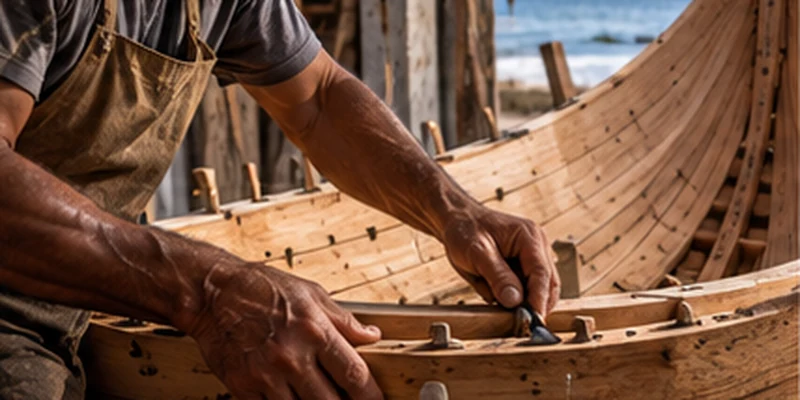
Greek Caique Boat Building

ArticleGreece

Greek Caique Boat Building

When a steamed hull plank leaves the steam box, the boatbuilder has only seconds to read three signals at once: the cloud of escaping steam, heat and moisture against the hand, and whether the first flex is silent. Then roughly a minute remains to bend it before it cools.

Steam, touch and sound give the answer. Then the builder has about sixty seconds to act.

Hebron Natsheh Recycled Glass Blowing

ArticlePalestine

Hebron Natsheh Recycled Glass Blowing

Hebron glassblowing is often performed by two to four makers working around the same furnace, coordinating gathering, blowing and shaping in a shared rhythm.

Here, embodied knowledge is collective. Several glassblowers must read the same molten material and each other's timing closely enough to behave almost like one maker.

Argan Oil Traditional Hand-Extraction

ArticleMorocco

Argan Oil Traditional Hand-Extraction

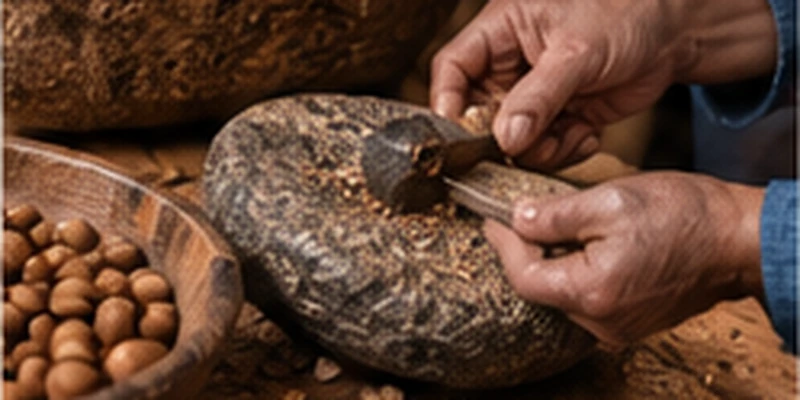
The argan nut is cracked between two stones with enough force to open one of the hardest fruit shells in the world — but not enough to crush the kernel inside. The correct angle and impact are learned by hand.

The first test in traditional argan oil making is a controlled fracture: break the shell, preserve the kernel. Later, the hands judge when kneaded paste is ready to release its oil.

Agadez Cross Lost-Wax Silversmithing

ArticleNiger

Agadez Cross Lost-Wax Silversmithing

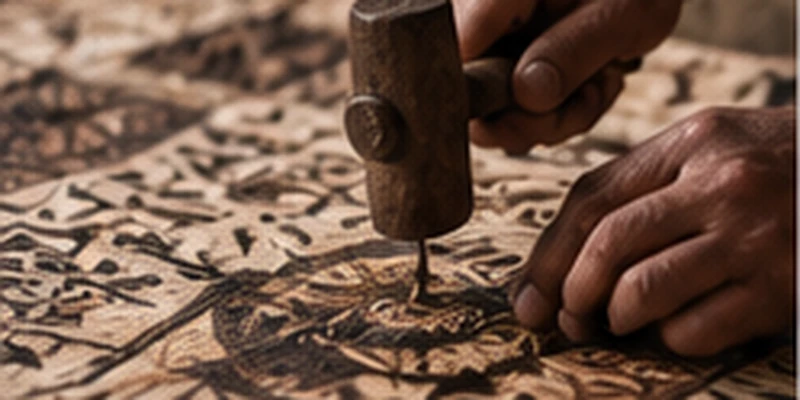
The cross is cast entirely by lost-wax rather than hammered into shape. Once cast, each piece receives etched geometric decoration unique to that object; the inherited form is repeated, but the surface is judged and cut by hand.

The form repeats; the surface never does. A centuries-old geometry still leaves room for the hand of each smith.

Lakota & Cheyenne Porcupine Quillwork

ArticleUnited States

Lakota & Cheyenne Porcupine Quillwork

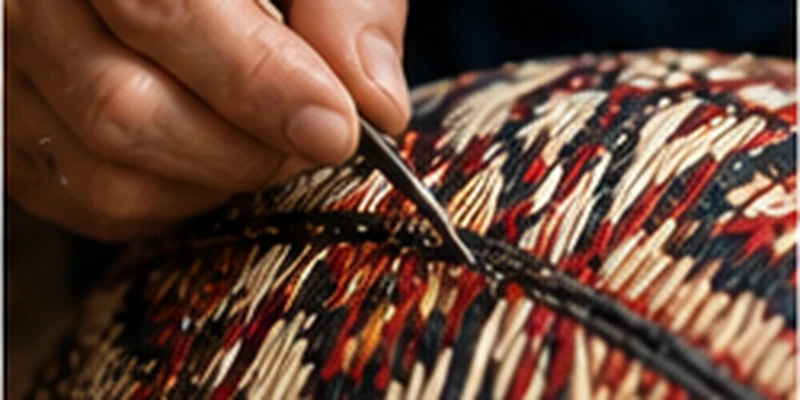
A softened porcupine quill remains pliable only briefly. It must be flattened, positioned and secured before it stiffens again — a short material window repeated for every quill in the piece.

Each quill sets its own clock. The maker works against the material's return to stiffness, repeating the same timed judgment hundreds or thousands of times.

Fijian Masi Barkcloth Making

ArticleFiji

Fijian Masi Barkcloth Making

When two barkcloth sheets are joined, the cassava-starch paste must reach a fleeting state between wet and dry: tacky enough to bond, but no longer fluid enough to spread through the fibers.

The sheets are joined at a moment the maker feels rather than measures — before the paste has a name for what it has become.


More from the archive →

A Global Research Map of Craft Technique

The Depository organizes public research leads through a 59-field schema covering materials, tools, process, context, risk, and possible applications. A mapped record is a starting point for deeper documentation; it is not presented as practitioner-verified unless that work has taken place.

Browse The ArchiveFind a Technique →

ARCHIVE MATURITY

From Research Lead to Living Transmission

The public collection is currently a mapped evidence base. CRAFT uses the following stages to show the deeper work still required and to avoid treating desk research as community verification.

01

Mapped

Structured from public and research sources.

02

Reviewed

Cross-checked and editorially strengthened.

03

Verified

Confirmed with a practitioner or knowledge-holding community.

04

Captured

Documented through interviews, images, video, or fieldwork.

05

Transmissible

Prepared for responsible teaching or application.

Global Coverage

205 countries · 2863 techniques

Suriname

Loading archive…

CONTRIBUTE TO THE DEPOSITORY

Help Strengthen the Depository

Craft knowledge is dispersed across communities, workshops, and personal memory. Suggest a missing technique, contribute knowledge to an existing record, or help us correct something.

Every contribution is researched and reviewed before the archive is changed. Submissions are never published automatically.