World Craft Depository

3,013 Mapped Technique Records
205 Countries Represented
59-Field Research Schema
From the Archive

Intelligence of the Hand

A rotating selection of extraordinary tacit knowledge from across CRAFT's growing global archive.

Lakota & Cheyenne Porcupine Quillwork

ArticleUnited States

Lakota & Cheyenne Porcupine Quillwork

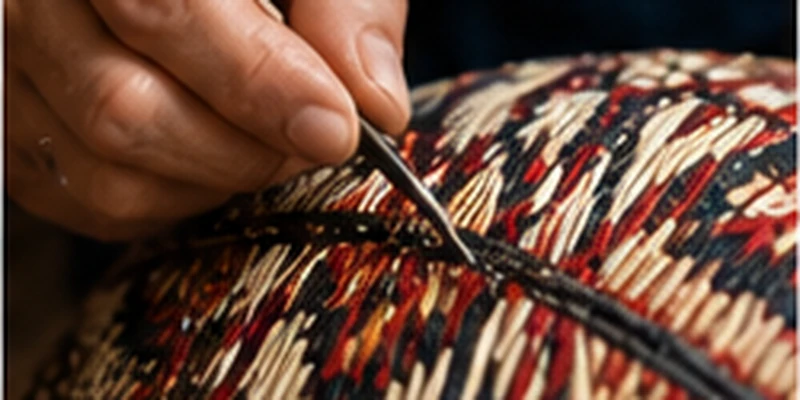
A softened porcupine quill remains pliable only briefly. It must be flattened, positioned and secured before it stiffens again — a short material window repeated for every quill in the piece.

Each quill sets its own clock. The maker works against the material's return to stiffness, repeating the same timed judgment hundreds or thousands of times.

Inuit Qulliq Soapstone Lamp Carving

ArticleCanada

Inuit Qulliq Soapstone Lamp Carving

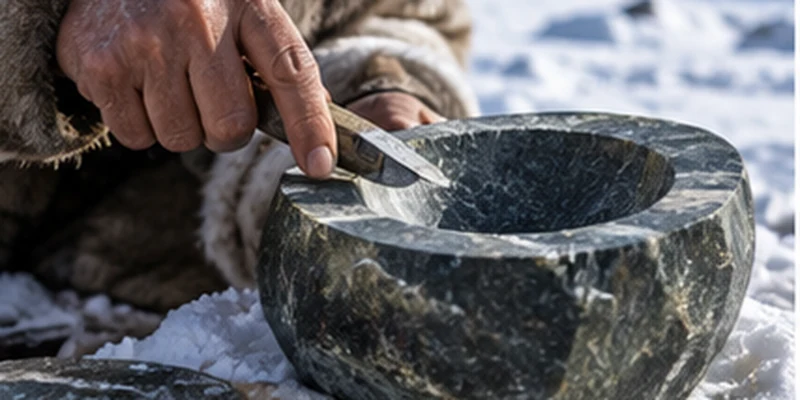
A qulliq must hold burning animal fat for long periods without cracking. As the soapstone reservoir is hollowed, the carver continuously judges wall thickness and depth by resistance under the tool, balancing fuel capacity against the stone left for strength.

Too much stone and the lamp holds less fuel. Too little and centuries of heat knowledge end in a crack.

Toledo Damascene Metal Inlay

ArticleSpain

Toledo Damascene Metal Inlay

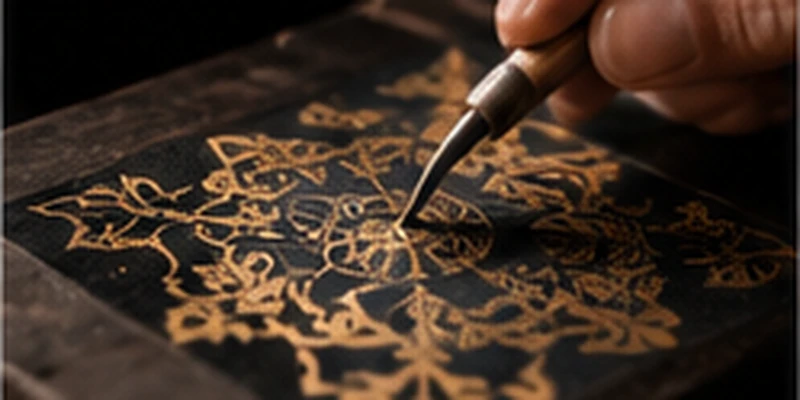
Before gold or silver wire is hammered into steel, the surface is cut into a microscopic cross-hatched grip. Experienced damasquinadores test the depth of that texture with a fingernail before committing the precious metal.

Before the gold goes in, a fingernail decides whether the steel is ready to hold it.

Ari & Amhara Hand-Built Pottery

ArticleEthiopia

Ari & Amhara Hand-Built Pottery

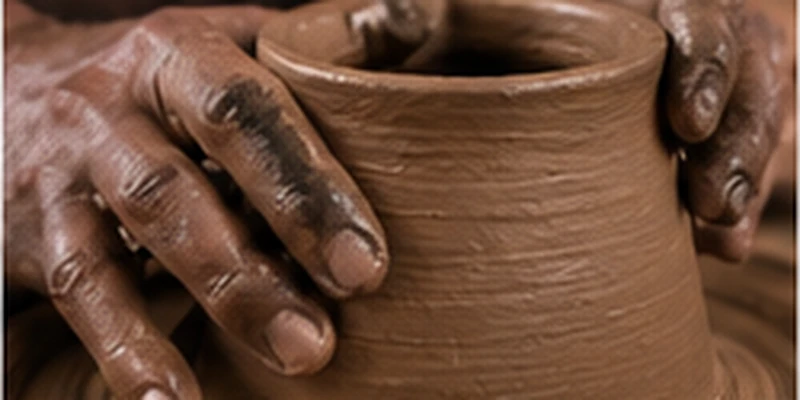
Among Ari potters, vessel forms are recognized as a hierarchy of difficulty: tila, disti, jebena and aksh. Learning is not simply linear; a potter may master the most difficult form yet remain less proficient at another.

Skill does not rise in a straight line. The hands remember different shapes as different kinds of intelligence.

Khatam-kari Micro-Mosaic Marquetry

ArticleIran

Khatam-kari Micro-Mosaic Marquetry

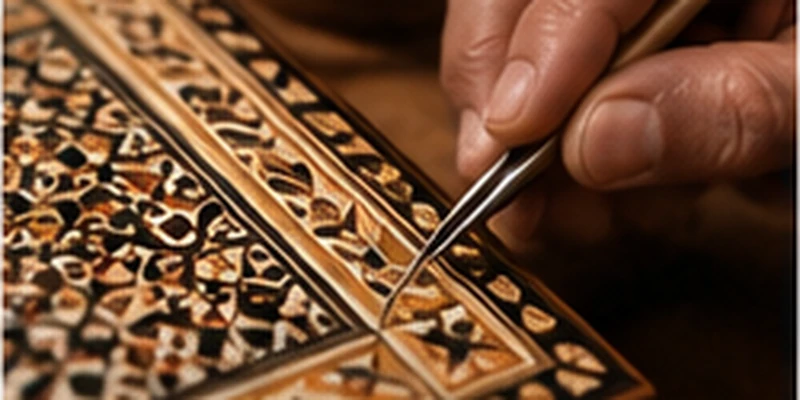
Tiny rods of wood, bone and metal are assembled into larger geometric bundles and sliced across their length. The pattern therefore has to be built in three dimensions before it appears as a flat surface.

The maker does not decorate the surface one fragment at a time. The pattern is engineered inside a bundle, then revealed by cutting it open.

Ottchil Korean Natural Lacquer Application

ArticleSouth Korea

Ottchil Korean Natural Lacquer Application

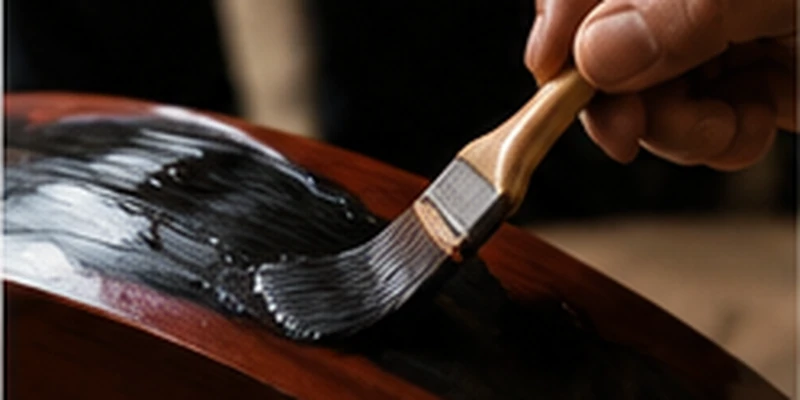
Natural lacquer cures through humidity. Experienced ottchil makers judge the atmosphere not only with instruments but through the sensation of moisture on the skin — an environment described as feeling almost like breathing into a cloud.

Here the hand does not only read the object. It reads the air surrounding it.


More from the archive →

A Global Research Map of Craft Technique

The Depository organizes public research leads through a 59-field schema covering materials, tools, process, context, risk, and possible applications. A mapped record is a starting point for deeper documentation; it is not presented as practitioner-verified unless that work has taken place.

Browse The ArchiveFind a Technique →

ARCHIVE MATURITY

From Research Lead to Living Transmission

The public collection is currently a mapped evidence base. CRAFT uses the following stages to show the deeper work still required and to avoid treating desk research as community verification.

01

Mapped

Structured from public and research sources.

02

Reviewed

Cross-checked and editorially strengthened.

03

Verified

Confirmed with a practitioner or knowledge-holding community.

04

Captured

Documented through interviews, images, video, or fieldwork.

05

Transmissible

Prepared for responsible teaching or application.

Global Coverage

205 countries · 3013 techniques

Italy

Loading archive…

CONTRIBUTE TO THE DEPOSITORY

Help Strengthen the Depository

Craft knowledge is dispersed across communities, workshops, and personal memory. Suggest a missing technique, contribute knowledge to an existing record, or help us correct something.

Every contribution is researched and reviewed before the archive is changed. Submissions are never published automatically.