
World Craft Depository

2,863 Mapped Technique Records
205 Countries Represented
59-Field Research Schema
From the Archive

Intelligence of the Hand

A rotating selection of extraordinary tacit knowledge from across CRAFT's growing global archive.

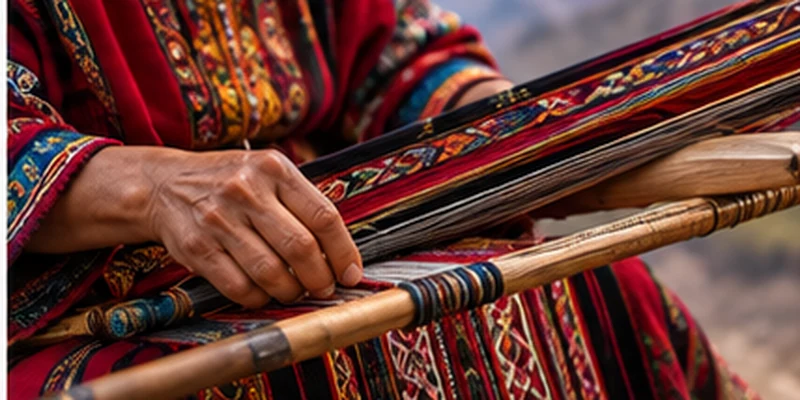
Chinchero Backstrap Loom Weaving

ArticlePeru

Chinchero Backstrap Loom Weaving

A backstrap loom has no fixed mechanism maintaining warp tension. The weaver’s own body becomes that mechanism: leaning forward releases tension, leaning back increases it, while both hands continue building the pattern.

The loom is incomplete without the body. The weaver herself is part of its tensioning system.

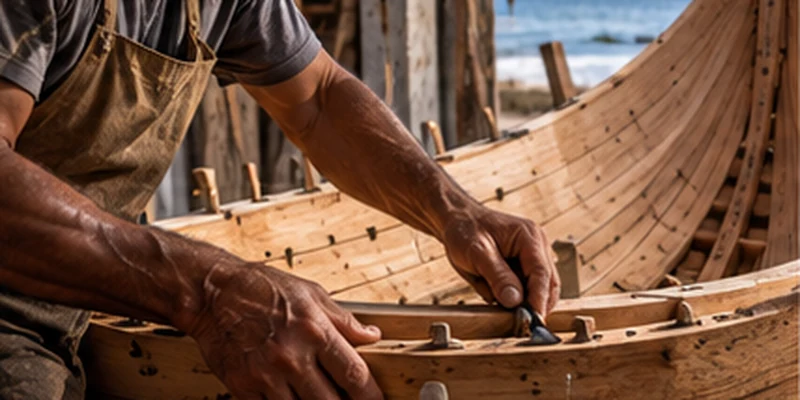
Greek Caique Boat Building

ArticleGreece

Greek Caique Boat Building

When a steamed hull plank leaves the steam box, the boatbuilder has only seconds to read three signals at once: the cloud of escaping steam, heat and moisture against the hand, and whether the first flex is silent. Then roughly a minute remains to bend it before it cools.

Steam, touch and sound give the answer. Then the builder has about sixty seconds to act.

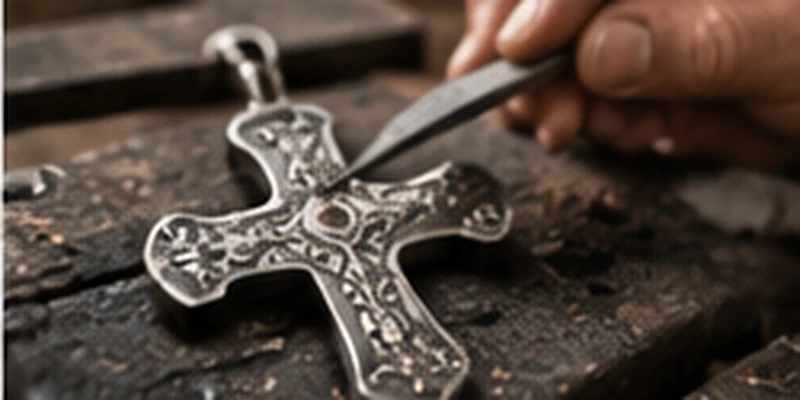
Agadez Cross Lost-Wax Silversmithing

ArticleNiger

Agadez Cross Lost-Wax Silversmithing

The cross is cast entirely by lost-wax rather than hammered into shape. Once cast, each piece receives etched geometric decoration unique to that object; the inherited form is repeated, but the surface is judged and cut by hand.

The form repeats; the surface never does. A centuries-old geometry still leaves room for the hand of each smith.

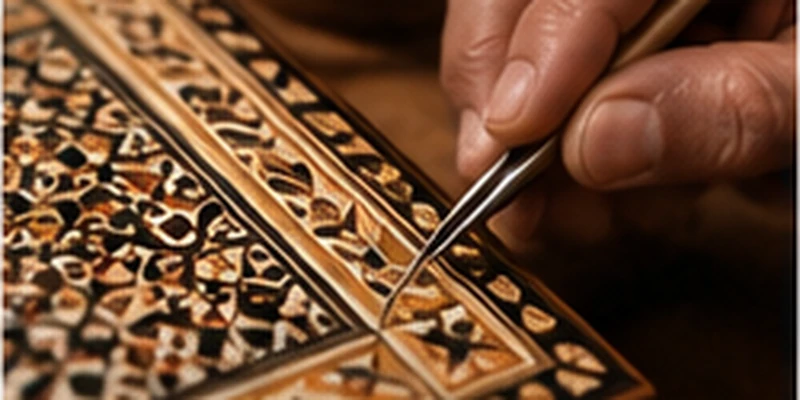
Khatam-kari Micro-Mosaic Marquetry

ArticleIran

Khatam-kari Micro-Mosaic Marquetry

Tiny rods of wood, bone and metal are assembled into larger geometric bundles and sliced across their length. The pattern therefore has to be built in three dimensions before it appears as a flat surface.

The maker does not decorate the surface one fragment at a time. The pattern is engineered inside a bundle, then revealed by cutting it open.

Fijian Masi Barkcloth Making

ArticleFiji

Fijian Masi Barkcloth Making

When two barkcloth sheets are joined, the cassava-starch paste must reach a fleeting state between wet and dry: tacky enough to bond, but no longer fluid enough to spread through the fibers.

The sheets are joined at a moment the maker feels rather than measures — before the paste has a name for what it has become.

Beit Chabab Naffah Bronze Bell Casting

ArticleLebanon

Beit Chabab Naffah Bronze Bell Casting

A bell mold made from mud, straw and goat hair takes roughly forty days to prepare. When the bronze is finally molten, the pour cannot be corrected: one mistake can erase six weeks of work before the bell has even existed.

Forty days of preparation arrive at one irreversible pour.


More from the archive →

A Global Research Map of Craft Technique

The Depository organizes public research leads through a 59-field schema covering materials, tools, process, context, risk, and possible applications. A mapped record is a starting point for deeper documentation; it is not presented as practitioner-verified unless that work has taken place.

Browse The ArchiveFind a Technique →

ARCHIVE MATURITY

From Research Lead to Living Transmission

The public collection is currently a mapped evidence base. CRAFT uses the following stages to show the deeper work still required and to avoid treating desk research as community verification.

01

Mapped

Structured from public and research sources.

02

Reviewed

Cross-checked and editorially strengthened.

03

Verified

Confirmed with a practitioner or knowledge-holding community.

04

Captured

Documented through interviews, images, video, or fieldwork.

05

Transmissible

Prepared for responsible teaching or application.

Global Coverage

205 countries · 2863 techniques

Egypt

Loading archive…

CONTRIBUTE TO THE DEPOSITORY

Help Strengthen the Depository

Craft knowledge is dispersed across communities, workshops, and personal memory. Suggest a missing technique, contribute knowledge to an existing record, or help us correct something.

Every contribution is researched and reviewed before the archive is changed. Submissions are never published automatically.