Spain · Woodwork / Ornamental Relief Carving
Yecla Cartela Relief Woodcarving
Talla ornamental de cartelas de Yecla
In Yecla, the observed practitioner cut ornamental relief motifs on cartelas. CRAEFT documented gouge work on acanthus leaves, volutes, flowers, corded trim and beads.
Risk level: Vulnerable ·
- Geographic Center
- Yecla, Region of Murcia, Spain
- Primary Materials
- Wood blank. Confirm the species used for each filmed example.
- Primary Tools
- Profiled carving gouges and a workbench. CRAEFT documents a large selection of gouges at the Tallas Tarsa workshop.
- Process Overview
- Draw the ornament on the blank, select gouges for the profiles, carve the relief and refine the detail. The study documents separate motif demonstrations on cartelas.
- Traditional Applications
- Carved ornamental elements for furniture and decorative woodwork.
- Contemporary Applications
- Yecla workshops apply relief carving to furniture and decorative woodwork. T&T Creatia lists reliefs for joinery and carved ornamental items among its current services. CRAEFT documents the cartela example separately. Sources: CRAEFT and T&T Creatia.
- Notable Practitioners
- Francisco Sánchez, woodcarver at Tallas Tarsa in Yecla, documented in the CRAEFT fieldwork.
- Key References
- https://www.craeft.eu/wp-content/uploads/2025/04/D1.1_V2_2.pdf | https://www.craeft.eu/representative-craft-instances/ | https://zenodo.org/records/14761192 | https://www.craeft.eu/representative-craft-instances/rci5-wood-woodcarving/ | https://ttcreatia.es/servicios.html
- Verification Status
- Desk-Researched — Needs Practitioner Verification
CRAFT DOCUMENTATION LAB · PILOT 01 · CRAFT-3087
Explore the Craft Process
Yecla Cartela Relief Woodcarving. Explore the proposed sequence of operations and the relationships between making, embodied knowledge and documentary evidence.
Research prototype · Documented observations and provisional interpretations are distinguished under Evidence
ACTIVITY 01 / 05
Draw cartela motif
Draw cartela motif.
Critical judgment
Interpret the ornamental drawing and identify which areas will need different cuts.
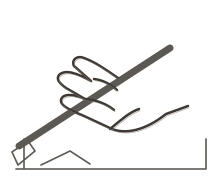
CRAEFT D1.1 pp. 75–76 and 83–85 documents cartela ornament, motif-directed gouge choice, outward bevel orientation, ambidexterity and video elicitation. The five-step grouping is editorial.
More from Spain
- Catalan Cork WorkingFood, Drink & Botanical · Stable
The harvesting and working of cork oak bark (Quercus suber) in the Empordà and Montseny regions of Catalonia — the most important cork production area in Spain.
- Eibar Damascened MetalworkMetalwork & Jewelry · Endangered
The damascening of firearms and decorative metal objects in Eibar — the Basque town whose gunsmiths developed the most technically sophisticated metal decoration tradition in Spain, distinct from Toledo damasquinado (CRAFT-1011) in its…
- Barcelona Modernista IronworkMetalwork & Jewelry · Vulnerable
The forging and assembly of decorative ironwork in the Barcelona Modernisme tradition — the architectural iron railings, balconies, gates, and canopies produced for the buildings of Antoni Gaudí, Lluís Domènech i Montaner, and Josep Puig i…
- Basque Iron ForgingMetalwork & Jewelry · Endangered
The forging of iron in the Basque hydraulic forge (ferrería) tradition — the industrial craft that made the Basque Country the primary iron production center of Spain and one of the most important in medieval Europe.
- Valencia Silk WeavingWeaving & Textiles · Endangered
The weaving of silk fabric in Valencia — a tradition continuous from the Moorish period when Valencia was the primary silk production center of the western Mediterranean, second only to the Byzantine empire.
- Jaén Olive Oil PressingFood, Drink & Botanical · Stable
The pressing of extra virgin olive oil in the traditional stone mill and hydraulic press almazara of Jaén — the province that produces more olive oil than any country outside Spain.
Related woodwork & carving elsewhere
- Hopi Katsina (Kachina) Doll CarvingUnited States · Vulnerable
Carving of cottonwood-root figures representing katsina spirits, traditionally given to children as teaching objects and today also produced as fine-art collector pieces, with the range of appropriate subjects governed by religious…
- Chinese Seal Carving (Chop-Making)Singapore · Critically Endangered
Chinese seal carving (zhuan ke) is the ancient practice of carving Chinese characters in reverse intaglio into stone, ivory, jade, or wood to create personal name seals (chops) used for official signatures in Chinese cultural practice.
- Damascus Wood-Rod Geometric Mosaic (Karr)Syria · Critically Endangered
A geometric wood-mosaic technique genuinely distinct from the archive's already-documented Damascus mother-of-pearl wood inlay tradition (CRAFT-2742), though founded by the same historical figure.
- Mennonite Furniture MakingBelize · Vulnerable
Hand- and workshop-built solid wooden furniture — dressers, cupboards, beds, tables, doors, shutters, and cribs — produced by Old Colony and Old Order Mennonite communities in Belize, most prominently the more traditional colonies of…
- Bahraini Copper-Pin Wooden Chest MakingBahrain · Endangered
The construction and decoration of wooden chests, formally documented as its own distinct craft domain, Chest Making, within Bahrain's official UNESCO Intangible Cultural Heritage inventory, practiced and demonstrated at the Al Jasra…
- Damascus Mother-of-Pearl Wood Inlay (Sandouk al Aa-rous)Syria · Critically Endangered
A decorative craft applying mother-of-pearl and other fine inlay materials to furniture, wall and ceiling panels, and household objects, dating back several hundred years — with some sources placing its origins as far back as 2,000 years —…